

I’ve been meaning to share this Dulce de Leche Crème Brûlée recipe for a while now, and I’m so excited it’s finally here. It’s a twist on the classic French dessert, with silky custard infused with dulce de leche and that irresistible crackly sugar topping.
This dulce de leche version delivers everything you love about the classic dessert. The thin caramelized sugar crust cracks beautifully with a spoon, revealing the creamy custard underneath. Dulce de leche melts into the custard base, adding a rich caramel flavor while keeping the smooth texture that makes crème brûlée so satisfying.
It’s elegant enough for a dinner party but surprisingly simple to make at home. And if dulce de leche desserts are your thing, you may also enjoy my Crème Brûlée Brigadeiros or my Churro Cake with Dulce de Leche—both family favorites over here.

What Is Dulce de Leche Crème Brûlée?
Dulce de Leche Crème Brûlée is a creamy baked custard dessert made with egg yolks, cream, milk, and dulce de leche for a rich caramel flavor. Like traditional crème brûlée, it is baked gently in a water bath until silky and smooth, then topped with sugar that is caramelized into a crisp, crackly layer. The result is a dessert with a creamy caramel custard underneath and a thin caramelized sugar crust on top.

What Does Dulce de Leche Crème Brûlée Taste Like?
This dessert is incredibly creamy with a soft custard texture that melts in your mouth. The dulce de leche adds a deep caramel flavor, while the brûléed sugar topping creates a thin, crisp shell that cracks beautifully when tapped with a spoon.

Why This Recipe Works
Crème brûlée might sound fancy, but the technique is actually simple. This version works especially well because the ingredients and method create an incredibly smooth custard.
Dulce de leche adds deep caramel flavor
Instead of relying only on the caramelized sugar topping, dulce de leche is blended directly into the custard so every bite has rich caramel flavor.
The cream-to-milk ratio keeps the custard silky
Using mostly cream with a little milk creates a custard that is rich but still delicate and smooth.
A gentle water bath ensures smooth custard
Baking the ramekins in a bain-marie allows the custard to cook slowly and evenly so it stays creamy instead of curdled.
The caramelized sugar topping adds contrast
That thin layer of brûléed sugar creates the signature crackly top that contrasts beautifully with the creamy custard underneath.

Ingredients
You only need a handful of simple ingredients to make this creamy dulce de leche crème brûlée.
- Whipping Cream 35% M.F
- Whole milk
- Vanilla extract or vanilla paste
- Pinch of salt
- Egg yolks
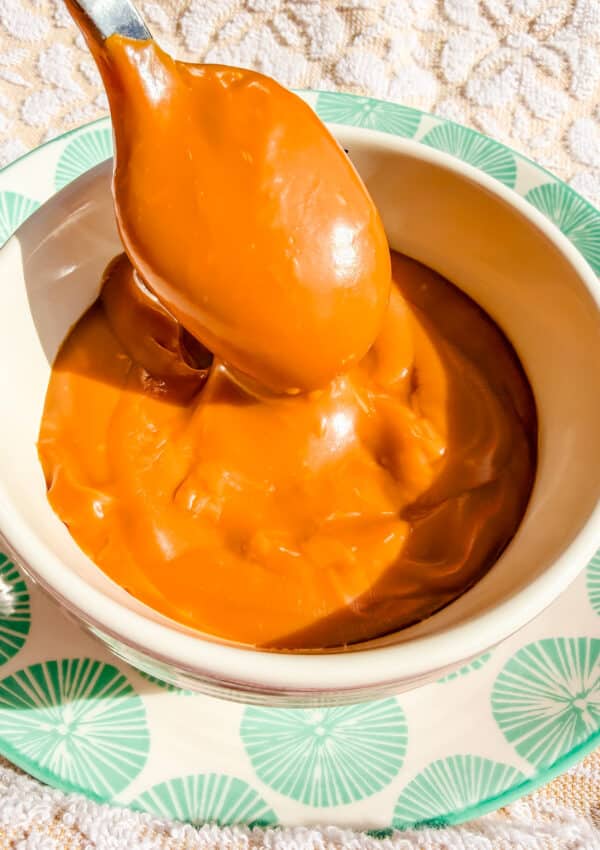
- Thick dulce de leche
- Sugar, for caramelizing the top
- For the best results, use a thick and creamy dulce de leche. Some store-bought versions are softer or more pourable, which can slightly thin the custard. A thicker dulce de leche gives the dessert the richest flavor and creamiest texture.
- If you don’t have dulce de leche on hand, you can also make my 15-minute homemade dulce de leche, which works perfectly in this recipe.

How to Make Dulce de Leche Crème Brûlée
This recipe follows the classic crème brûlée method, with a dulce de leche twist.
1. Heat the cream mixture
In a saucepan, combine the cream, milk and dulce de leche. Heat gently until warm and smooth, stirring until the dulce de leche dissolves.
2. Temper the egg yolks
In a bowl, whisk the egg yolks. Slowly pour in the warm cream mixture while whisking constantly to prevent scrambling. Combine with vanilla and salt.
3. Strain and pour
Strain the custard for a smooth texture, then divide it between ramekins.
4. Bake in a water bath
Place ramekins in a baking dish and pour hot water around them to create a bain-marie. Bake until the custard is just set in the center.
5. Chill
Refrigerate for several hours until completely set.
6. Brûlée the top
Sprinkle sugar evenly over each custard and caramelize with a kitchen torch until golden and crisp.

Pro Tips for Perfect Crème Brûlée
Use room temperature egg yolks
Room temperature yolks mix more smoothly with the warm cream mixture, helping create a silky custard without lumps.
Strain the custard before baking
Pouring the custard through a fine mesh sieve removes bubbles and ensures an ultra-smooth texture.
Use a water bath for even baking
Baking the ramekins in a water bath (bain-marie) helps the custard cook slowly and evenly so it stays creamy instead of curdled.
Don’t overbake the custard
The edges should be set while the center still jiggles slightly. The custard will continue to set as it cools.
Chill completely before torching the sugar
Cold custard helps the sugar caramelize quickly without warming the dessert underneath.
Use a thin, even layer of sugar
Too much sugar can create a thick, bitter crust. A light, even sprinkle melts into the perfect crackly topping.
Best Ramekins for Crème Brûlée
While any oven-safe ramekin can work, shallow crème brûlée ramekins are my favorite.
The wider, shallower shape creates the perfect ratio of creamy custard to caramelized sugar topping. More surface area means more of that crackly brûléed sugar layer in every bite.
Shallow ramekins also help the custard cook more evenly since the custard layer isn’t as deep.
Most classic crème brûlée ramekins hold about 4 to 5 ounces, which works perfectly for this recipe.
Why Use a Water Bath for Crème Brûlée?
Crème brûlée is a delicate custard, which means it needs gentle, even heat while baking. That’s why the ramekins are placed in a water bath (also called a bain-marie).
The hot water surrounding the ramekins helps regulate the temperature so the custard cooks slowly and evenly.
Without a water bath, the edges of the custard can cook too quickly while the center is still liquid. This can lead to curdled, grainy, or cracked custard instead of the smooth and creamy texture that makes crème brûlée so special.
The water bath acts as a buffer, keeping the custard at a steady temperature and helping it bake into that perfect silky consistency.
A Quick Safety Tip for the Water Bath
When making crème brûlée, the custards bake in a bain-marie (water bath), which means the ramekins sit inside a larger dish filled with hot water. This helps the custard cook gently and evenly.
However, it’s important to avoid carrying a baking dish full of boiling or very hot water across the kitchen. It’s easy to trip, spill the water, or accidentally splash yourself, which can cause serious burns.
Instead, place the empty baking dish with the filled ramekins directly in the oven first. Once the dish is safely on the oven rack, carefully pour hot water into the baking dish until it reaches about halfway up the sides of the ramekins.
This simple step makes the process much safer and easier to manage.
How to Know When Crème Brûlée Is Done Baking
Crème brûlée can be tricky the first time you make it, but the signs are simple once you know what to look for.
The custard is done when:
- The edges are set
- The center still has a slight jiggle
- The surface looks smooth and not puffed
If the center moves like soft gelatin, it’s ready. The custard will continue to set as it cools, so it’s better to slightly underbake than overbake.

How to Store Crème Brûlée
Crème brûlée stores beautifully, which makes it a great make-ahead dessert.
Store the custards without the sugar topping.
- Cover and refrigerate for up to 3 days
- Add the sugar and caramelize the top right before serving
If the sugar is brûléed too early, it will soften as it absorbs moisture from the custard.

Troubleshooting Crème Brûlée
Why is my crème brûlée grainy?
This usually happens if the custard gets too hot or overbakes. Baking in a water bath helps prevent this.
Why didn’t my sugar harden on top?
Make sure the custard is fully chilled before torching the sugar and use a thin, even layer.
Can I make crème brûlée without a torch?
Yes. You can place the ramekins under the oven broiler for a minute or two until the sugar melts and caramelizes. Watch closely so it doesn’t burn.

Dulce de Leche Crème Brûlée
Equipment
- 4–6 ramekins (4–5 oz each)
- Large baking dish Used to hold the ramekins while baking in a water bath.
- Saucepan For heating the cream, milk, and dulce de leche mixture.
- fine mesh sieve Helps strain the custard for an ultra-smooth texture.
- Kitchen torch For caramelizing the sugar topping and creating the signature crisp crust.
Ingredients
- 250 ml whipping cream (35% M.F) 1 cup
- 140 ml whole milk ½ cup + 1 tablespoon whole milk (140 ml)
- 170 g thick dulce de leche 5.6 oz
- ½ tablespoon vanilla extract or vanilla paste about 7.5 g
- pinch of salt
- 80 g egg yolks about 4 yolks
- granulated sugar 4-5 teaspoons for caramelizing the top
Instructions
- In a saucepan, combine the whipping cream, milk, and dulce de leche. Heat over low heat, stirring occasionally, until the mixture is hot and the dulce de leche has completely dissolved. The mixture should be steaming but not boiling.250 ml whipping cream (35% M.F), 140 ml whole milk, 170 g thick dulce de leche
- Remove from the heat and allow it to cool slightly.
- In a bowl, whisk the egg yolks. Slowly pour the warm cream mixture into the yolks while whisking constantly. This step gently warms the eggs and prevents them from scrambling. Continue whisking until the custard is smooth and fully combined.80 g egg yolks
- Add the vanilla extract and salt, mixing gently.½ tablespoon vanilla extract or vanilla paste, pinch of salt
- Pour the custard through a fine mesh sieve into another bowl to remove bubbles or small lumps. This step helps create an extra smooth crème brûlée.
- Divide the custard evenly among ramekins. If you see foam on top, gently remove it with a spoon.
- Place the ramekins in a baking dish. And place the dish into a preheated oven at 160°C (320°F) . Carefully pour hot water into the baking dish until it reaches about halfway up the sides of the ramekins.
- Bake for 35–40 minutes, or until the edges are set but the center still has a gentle jiggle when you lightly shake the ramekin. The custard should look set around the edges but slightly wobbly in the middle, similar to soft gelatin.
- Carefully remove the ramekins from the water bath and allow them to cool at room temperature.
- Refrigerate for at least 4 hours, or until completely set.
- Before serving, sprinkle about 1 teaspoon of sugar evenly over each custard. Use a kitchen torch to melt and caramelize the sugar until it forms a thin golden crust.granulated sugar
- Allow the sugar to harden for about 1 minute, then serve.
Notes
- For the best texture, use a thick, creamy dulce de leche. Some versions are more pourable, which can slightly thin the custard.
- If you don’t have dulce de leche, you can use homemade dulce de leche, which works beautifully in this recipe.
- A bain-marie, or water bath, is when the ramekins are placed inside a larger baking dish filled with hot water.
- The water helps regulate the heat so the custard cooks slowly and evenly, preventing the eggs from curdling. This is what gives crème brûlée its silky smooth texture.
- The edges are set
- The center still jiggles slightly
- The surface looks smooth and not puffed
- The custard will continue to set as it cools.
- Store the custards without the sugar topping in the refrigerator for up to 3 days.
- Add the sugar and caramelize the top right before serving so the crust stays crisp.



Leave a Reply