
I had a special request to share my grandmother’s Brazilian Flan (Pudim) recipe, and I’m thrilled to finally post it! Pudim was my grandmother’s absolute favorite dessert. If you haven’t noticed, the name of this website is “Tasty Recollections,” because my childhood was filled with her delicious creations. She made Pudim and Brazilian carrot cake so often that I got a bit tired of eating both when I was a kid. Funny thing is, as I’ve gotten older, my tastes have changed. I used to be all about chocolate (who isn’t?), but now, I really appreciate this pudim. As I was enjoying a slice recently, I thought, “Grandma really knew her stuff. This pudim is really the best!”
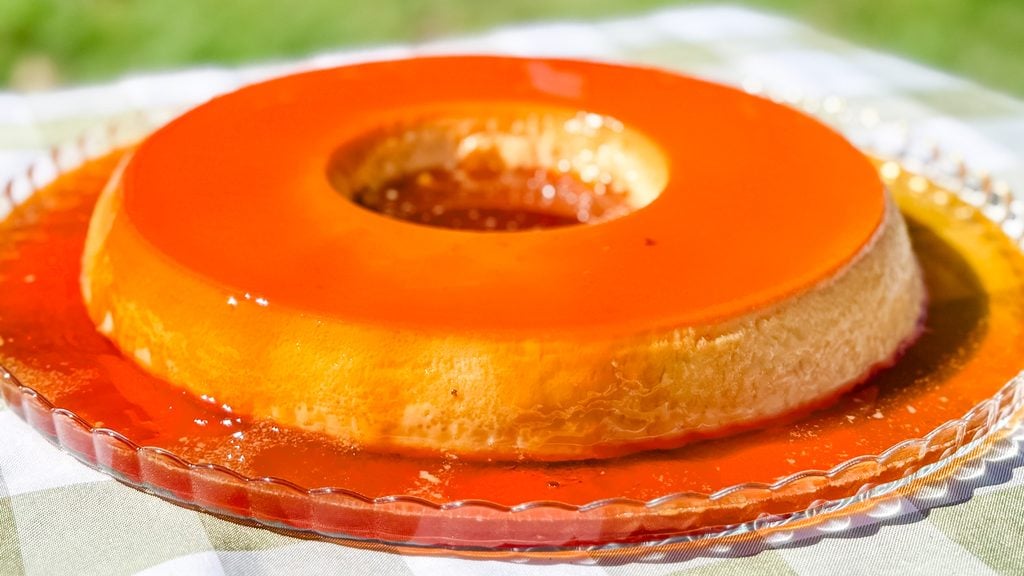
What is Pudim?
Pudim, also known as Brazilian flan, is a creamy custard dessert. It’s in the same family as crème brûlée, crème caramel, and crème catalana, but with a Brazilian twist: it uses condensed milk. This dessert has been passed down in my family for generations, and if my daughter keeps up the tradition, she’ll be the fifth generation of pudim makers.
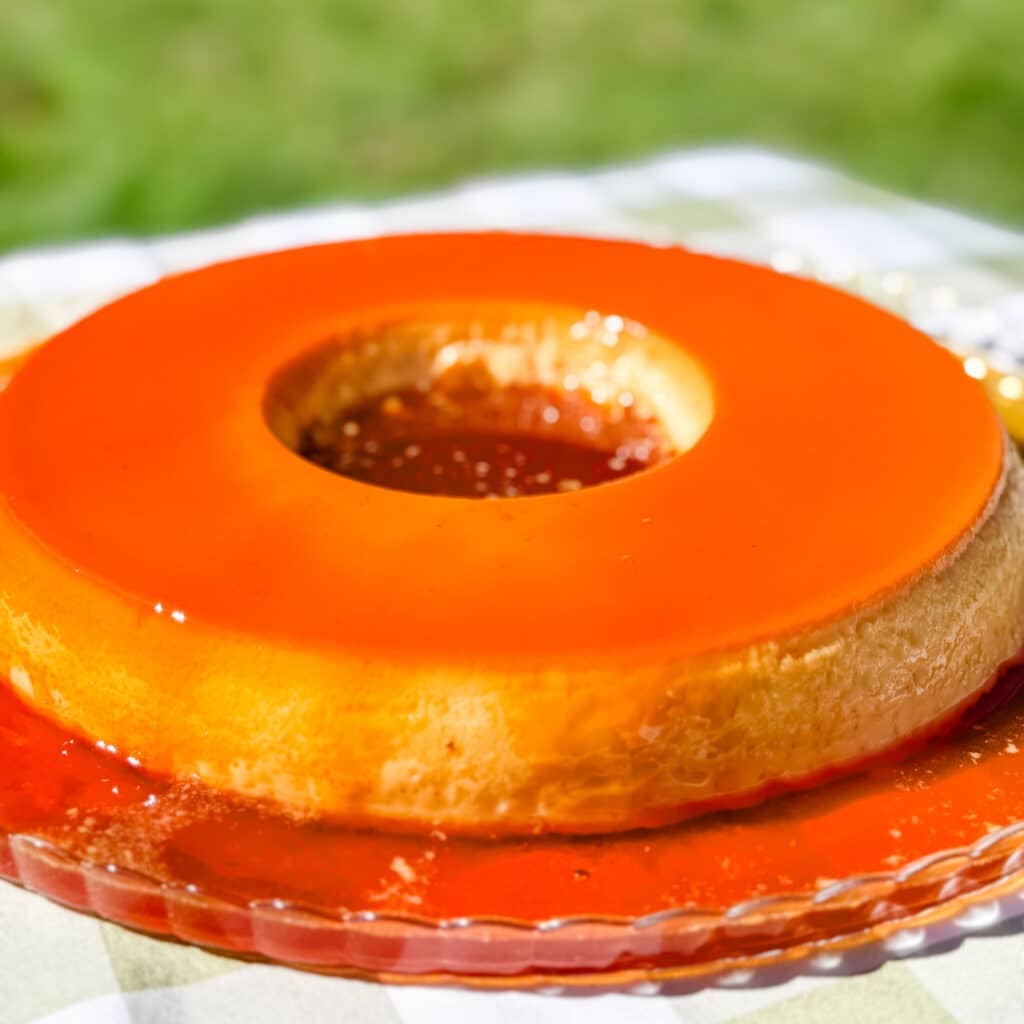
Smooth vs. Bubbly Pudim
Ask a Brazilian what makes the perfect pudim and you may get a very strong opinion.
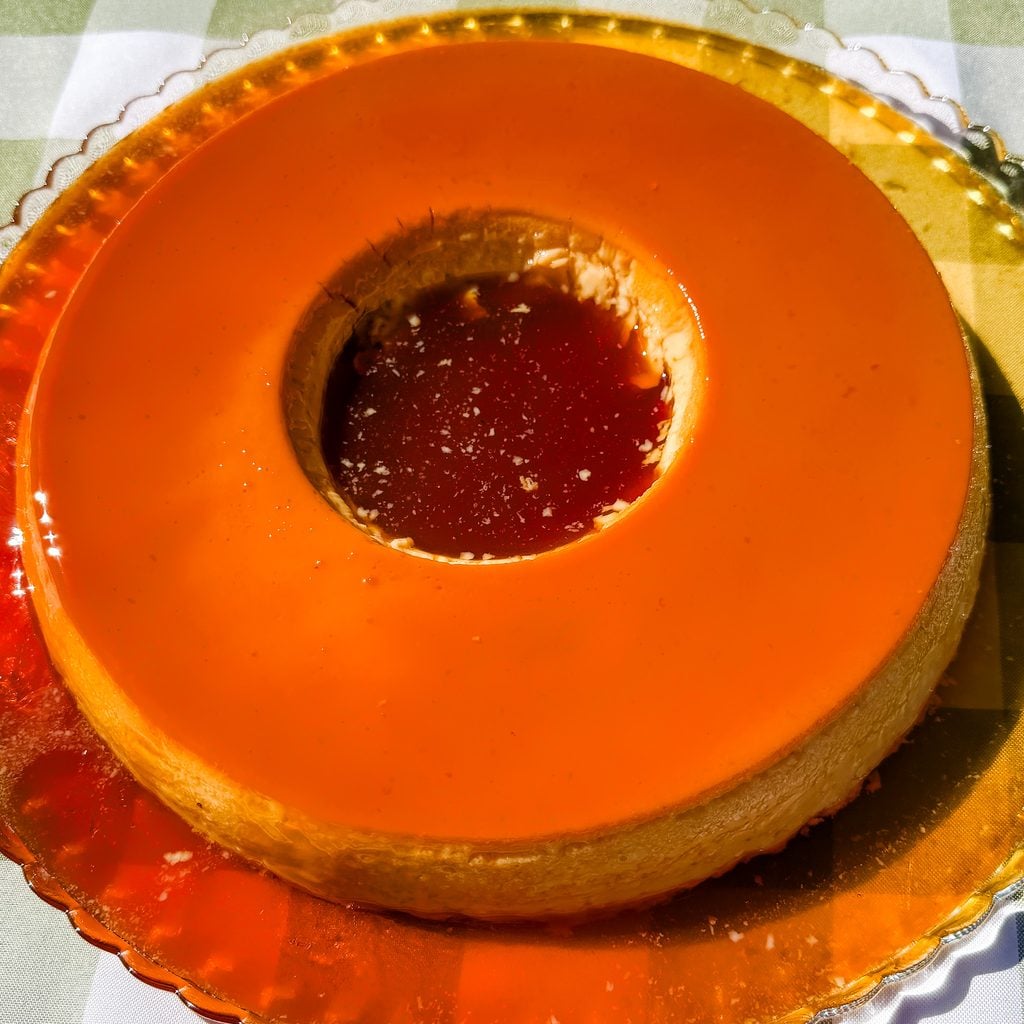
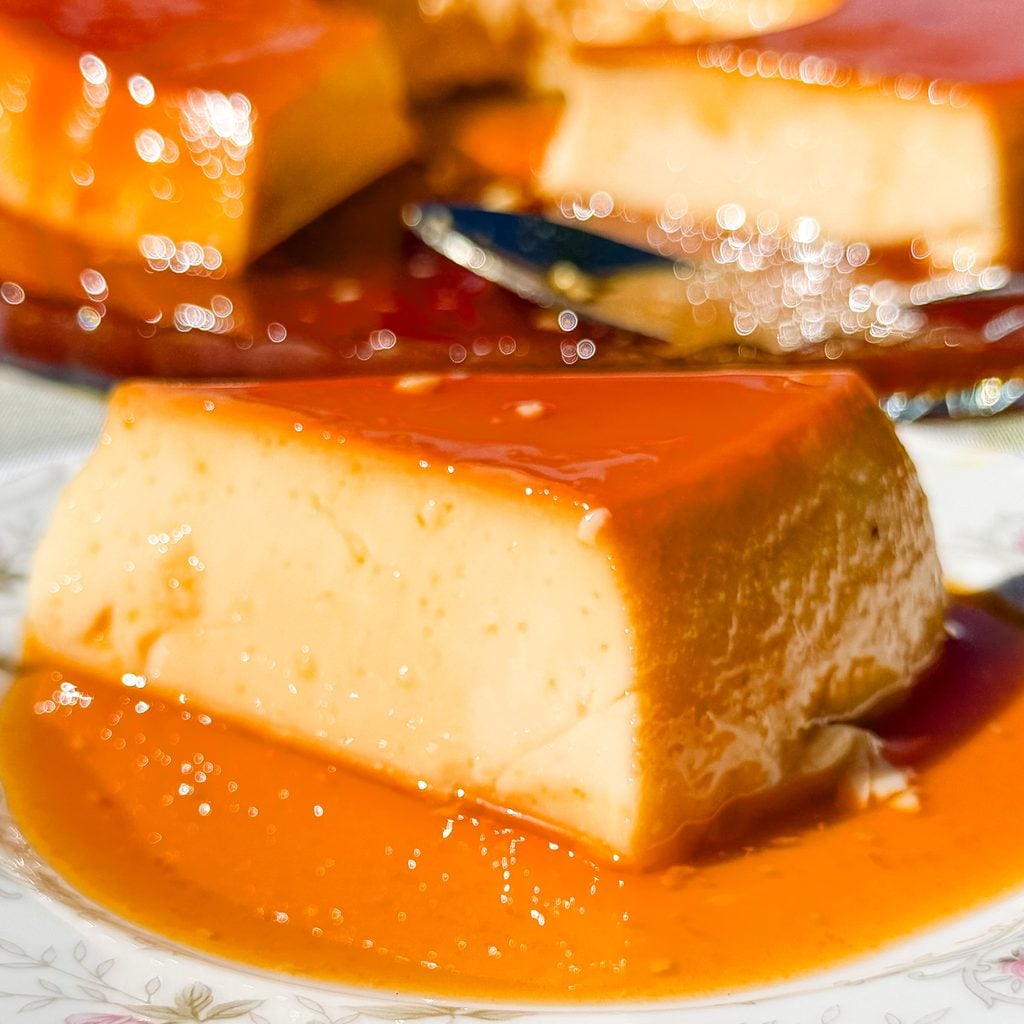
Some people love their pudim full of little holes and bubbles. Others—myself included—want it completely smooth and silky.
There’s no right answer here. It’s mostly a matter of preference.
This recipe is for the smooth kind.
The trick is to be gentle with the custard and bake it slowly in a water bath. You don’t want to whip a lot of air into the eggs, and you don’t want the custard baking at a high temperature.
If you prefer a pudim with holes, you can do pretty much the opposite: mix more vigorously and use a higher baking temperature.
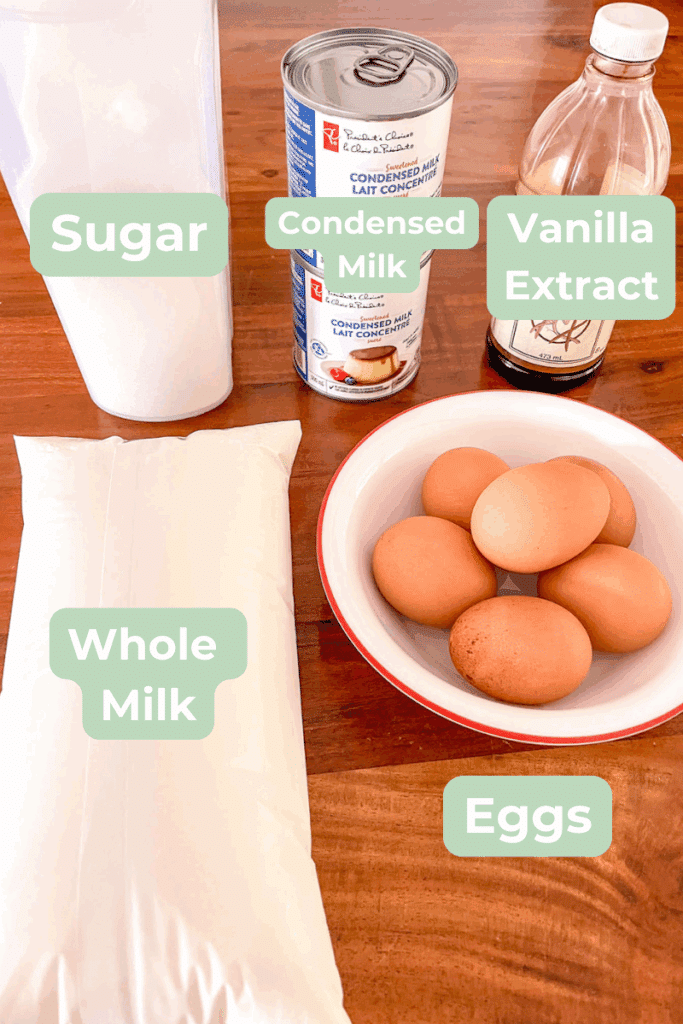
Brazilian Flan Ingredients:
- Sugar – This becomes the caramel coating the pan.
- Sweetened condensed milk – The ingredient that gives Brazilian pudim its signature richness and sweetness.
- Whole milk – Loosens the condensed milk and keeps the custard creamy.
- Eggs – These set the custard.
- Vanilla extract – Completely optional, but I like the little bit of flavor it adds.
You can double or halve the recipe to adjust the size, but keep in mind that it will affect the cooking time.
How to Make Brazilian Flan (Pudim) Overview:
Melt sugar until amber, then carefully add water and swirl the caramel around your bundt pan. Strain the custard into the pan, cover with foil, and bake in a water bath at 320°F for at least 1 hour and 30 minutes. Once set, cool slightly, then chill in the fridge for at least 6 hours before serving.
How to Tell When Pudim Is Done
Knowing when to take pudim out of the oven can be a little tricky because you don’t want to wait until it’s completely firm.
The pudim is ready when the center jiggles as one piece when you gently move the pan. It should no longer look or move like a liquid. You want a soft, unified wobble—not a loose, wavy center.
Don’t worry if it still seems a little soft. Pudim continues to firm up as it cools and then chills in the refrigerator, so if you wait until it feels completely set in the oven, you risk overbaking it.
Once the center has that gentle, whole-custard jiggle, take it out and let it cool before refrigerating.
How to Unmold Pudim Without Breaking It
This is probably the part that makes people the most nervous, but it really doesn’t need to be.
First, make sure your pudim is thoroughly chilled. A cold custard is much easier to handle than one that is still warm.
This is the part that makes people nervous, but I promise it’s easier than it looks.
First, make sure your pudim is completely chilled. Run a thin knife around the edge of the pudim to loosen it from the sides of the pan.
Then fill a larger pan or baking dish with hot water and place the bottom of the pudim pan in the water. Let it sit for a few minutes. The heat gently loosens the caramel from the bottom of the pan, making it much easier for the pudim to release.
Place your serving plate over the top of the pan, then carefully flip the two together in one confident motion.
Give the pan a little shake if needed, then slowly lift it away.
And there it is: a whole, glossy pudim with all that caramel running down the sides.
The key is to warm the caramel, not the custard. You only need a few minutes in the hot water—just enough to loosen the caramel and help the pudim slide out.
A Few Things That Make a Difference
- Don’t overblend the custard. Too much air means bubbles.
- Strain the custard before baking. It makes a smoother final texture.
- Bake it gently. Low heat and a water bath are your friends here.
- Don’t overcook it. Look for a gentle jiggle in the center.
- Chill it completely. This makes a huge difference when unmolding.
- Make it the day before. Pudim is one dessert that rewards a little planning.
Make Ahead
Pudim is one of those desserts that is actually better when you make it ahead.
The custard needs several hours in the refrigerator to fully chill and set, so I usually make it the day before I plan to serve it. This also takes one more thing off your list when you’re making dessert for a dinner or family gathering.
Once the pudim has cooled, cover it and refrigerate it until you’re ready to serve. I recommend chilling it for at least 6 hours, but overnight is even better.
For the prettiest presentation, unmold it shortly before serving.
Storage
Keep pudim covered and refrigerated. It will keep well for up to 4 days in the refrigerator.
If you’ve already unmolded it, cover the whole plate tightly with plastic wrap or transfer individual slices to an airtight container. I like serving pudim cold, straight from the refrigerator.
Troubleshooting/FAQ:
Q: My pudim has bubbles in it. What did I do wrong?
A: Bubbles form from too much air or high baking temperatures. Mix the custard gently and bake at a low temperature.
Q: How do I prevent the caramel from turning bitter?
A: Don’t overcook the caramel. Add water once the sugar has melted to avoid bitterness.
Q: My pudim didn’t set properly. What happened?
A: It might not have baked long enough. Make sure it jiggles without ripples and a toothpick comes out clean when inserted into your pudim.
Q: How do I know when the pudim is ready to come out of the oven?
A: The top should no longer look wet, and the custard should have a gentle jiggle when you move the pan. You’re looking for a jiggle, not a ripple. If the center still looks liquid and makes waves when you move the pan, it needs more time. Remember that pudim will continue to set as it cools and chills, so you don’t want to bake it until it is completely firm.
Q: Can I use a different pan?
A: Yes, but it will affect the cooking time. Traditional aluminum bundt pans work best. Adjust baking time if using different pans.
Brazilian Flan (Pudim)
Equipment
- Bundt Pan I like to use a pan made of aluminum
- Large Roasting Pan that fits your Bundt Pan for the water bath
- Oven Mitts to handle the hot pan
- Aluminum foil to cover your bundt pan
Ingredients
For the Flan
- 2 cans condensed milk 600 ml
- 600 ml whole milk
- 4 eggs
- 2 yolk
- 1/4 teaspoon vanilla extract
Caramel Sauce
- 1 + 1/2 cup white sugar
- 1/2 cup boiling water
Instructions
Make the Caramel Sauce
- Melt the sugar. Add the sugar to a medium saucepan and cook over low to medium-low heat. Let it melt slowly, swirling the pan occasionally rather than stirring constantly.1 + 1/2 cup white sugar, 1/2 cup boiling water
- Once the sugar has melted and turned a light amber color, carefully add the boiling water a little at a time, stirring constantly. The caramel will bubble vigorously as you add the water, so go slowly and be careful.
- Once all the water has been incorporated, pour the caramel into your bundt pan and carefully swirl the pan to coat the bottom and sides. Use oven mitts when handling the hot pan, and be careful—the caramel will be extremely hot.
Make the Custard:
- In a bowl, whisk together eggs, milk, vanilla extract and condensed milk until smooth.2 cans condensed milk , 600 ml whole milk, 4 eggs, 2 yolk, 1/4 teaspoon vanilla extract
Assemble the Pudim
- Preheat the oven to 320°F (160°C).
- Pour the custard through a fine-mesh sieve directly into the caramel-coated bundt pan. Straining the custard helps catch any bits of egg and gives you a smoother finished pudim.
- Place the pudim pan inside a large roasting pan. Place the roasting pan in the oven first, then carefully pour hot water into the roasting pan until it reaches about halfway up the sides of the pudim pan.
Bake
- Bake at 320°F (160°C) for about approximately 2 hours, or until the pudim is set but still gently jiggles as one piece when you move the pan.
- Your flan is ready when it jiggles without ripples. It should no longer move like a liquid, but it does not need to be completely firm.
Refrigerate
- Let it cool for 30 minutes to 1 hour. Run a knife around the edges before refrigerating.
- Chill in the fridge for at least 6 hours, preferably overnight.
Unmold and Serve
- Place the bundt pan over hot water or an open flame for about 30 seconds to 1 minute to melt the caramel.
- Run a knife around the edges again.
- Wiggle the pan to ensure the pudim is loose. Place a large, rimmed plate over the bundt pan and carefully flip it over. Serve and enjoy!
Notes
- Baking time can vary depending on your oven. In my oven it takes somewhere around 2 to 2.5 hours.
- If your caramel ends up a little lumpy do not worry. Little lumps of sugar will usually melt in the oven as the flan bakes. It is more important that you do not burn your caramel trying to melt all the lumps. Next time use low to medium heat to melt the sugar and resist stirring too much. Swirl the pan gently instead.
- Cleaning caramel: Don’t scrub your caramel-covered utensils or pan. Simply submerge them in water and let them sit for a couple of hours. The hardened caramel will dissolve on its own, making cleanup surprisingly easy.
- 🚨 Safety tips:
- Place the pan with your flan in the oven first, then pour the hot water into the roasting pan. Walking around with a tray full of boiling water is just an accident waiting to happen.
- Use oven mitts to swirl the caramel and be very careful when handling caramel or hot sugar in general!





Heavenly