
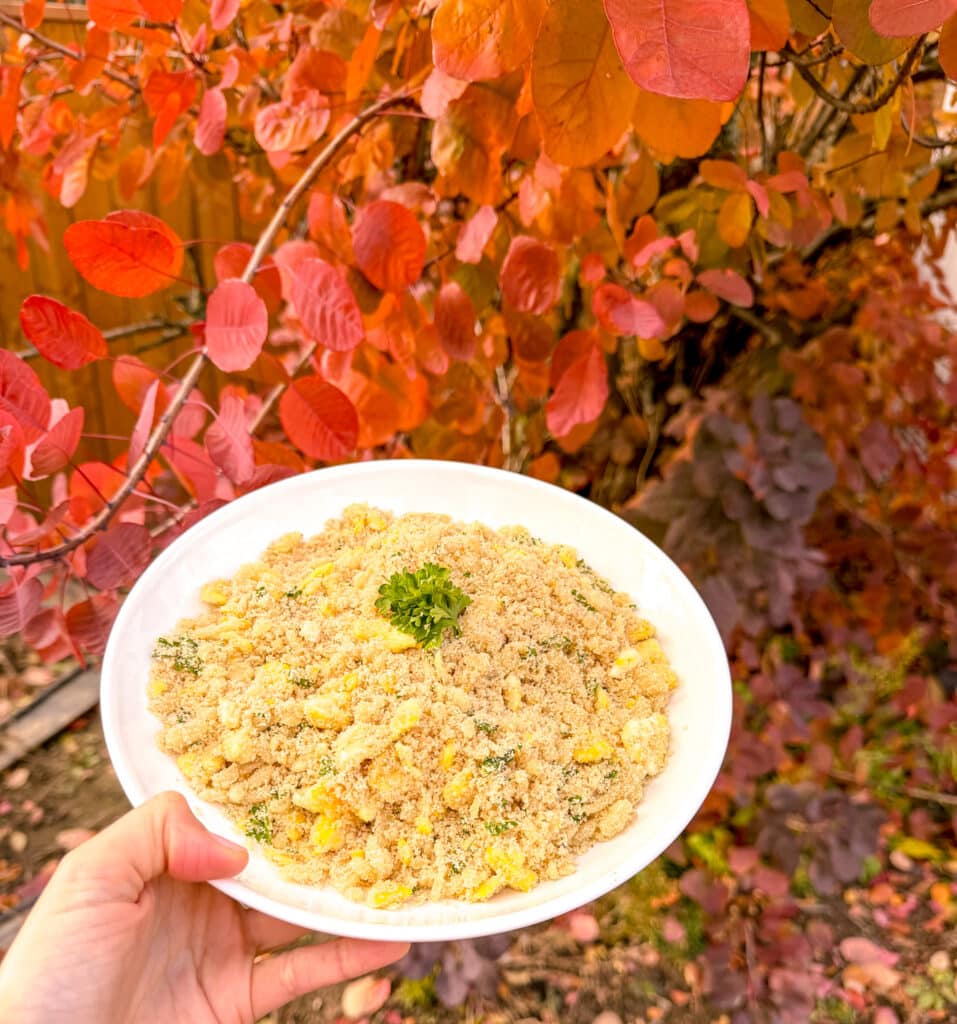
This side dish is seriously close to my heart, and I’m so excited to share it—especially since it’s not something you see on every North American table. Farofa, made from cassava flour, is a staple in Brazilian kitchens. We eat it all the time with everyday meals—like steak, grilled chicken, or my yogurt marinated baked chicken thighs—but somehow it feels extra magical at Christmas. Year after year, it’s been part of our holiday table, and this year, Farofa with Eggs will be there too, bringing that cozy, Brazilian touch to the festivities. (recipe updated with more photos and a new video)

There are countless ways to enjoy farofa, but this version, passed down from my grandmother’s kitchen, is my absolute favorite farofa recipe. If you love this one, you might also enjoy my Bacon Farofa, which is another great way to make farofa.

Equipment:
All you will need is a nonstick skillet, and a wooden spoon or silicone spatula.
Ingredients Overview:
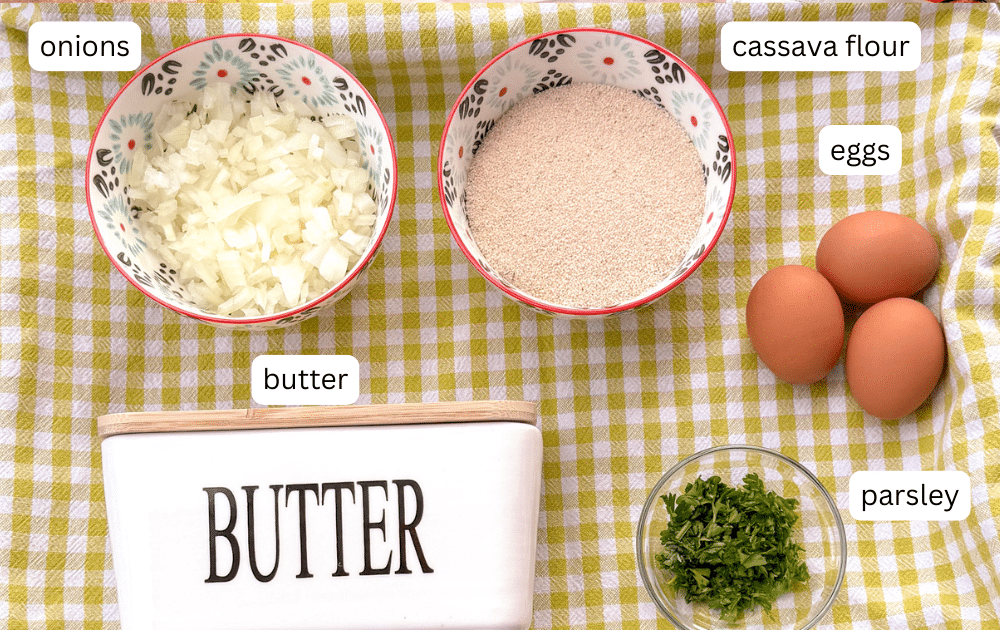
- Cassava flour: Cassava flour is made from the cassava root and is the main ingredient of this dish. You can find raw cassava flour or toasted Cassava flour. You can use either one; but, I like the raw kind better. If you live in Canada you can buy it from brazilianmarket.ca, Portuguese stores, and occasionally on Amazon, though it may be more expensive.
- Eggs
- Onions and butter
- Salt to taste
- Fresh parsley (optional)
Directions Overview:
Scramble the eggs and set them aside, then sauté the onions until soft and melt in the butter. Add the cassava flour, return the eggs to the pan, stir in parsley, and adjust the salt to taste.
How to serve farofa:
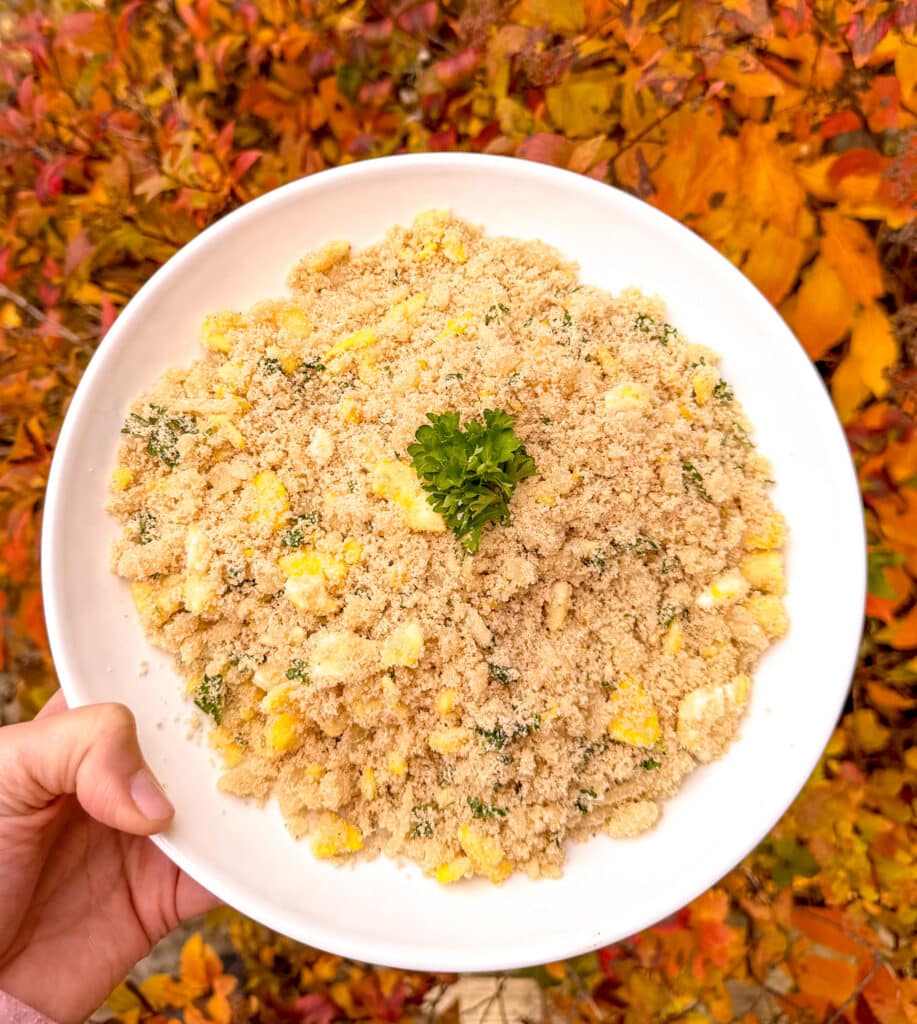
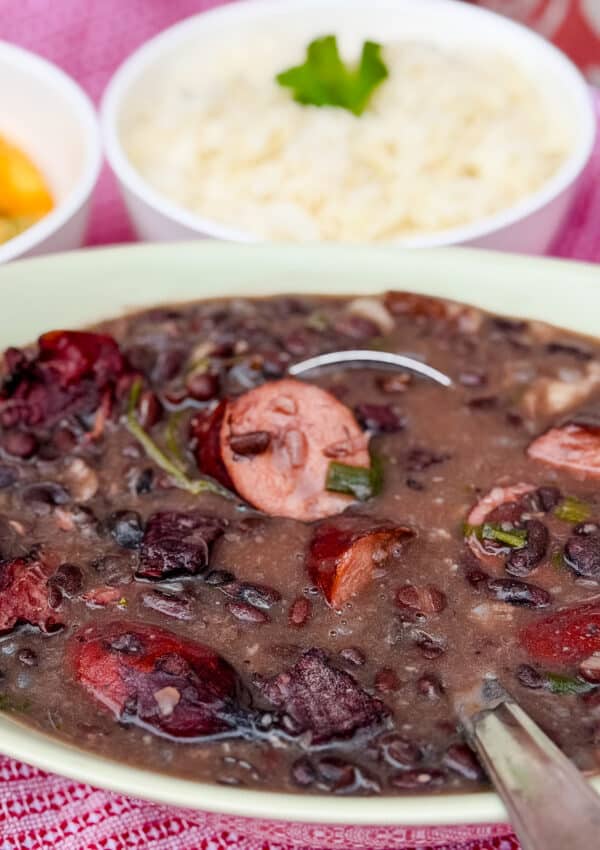
Perfect Pairing: Farofa goes perfectly with the classic Brazilian trio—rice, black beans, and whatever protein you’re serving. Whether it’s juicy chicken or a perfectly grilled steak, it just makes the whole meal feel balanced and satisfying.
Steak and Farofa: If you’re a steak lover, this combo is unbeatable. Imagine a beautifully seared steak with its juices mixing with the savory notes of farofa—this is one of my favorite ways to enjoy it.
Turkey Stuffing: Around Christmas, farofa even doubles as a stuffing for turkey. It’s a fun, flavorful way to bring a little Brazilian warmth to the holiday table.
Storage Instructions:
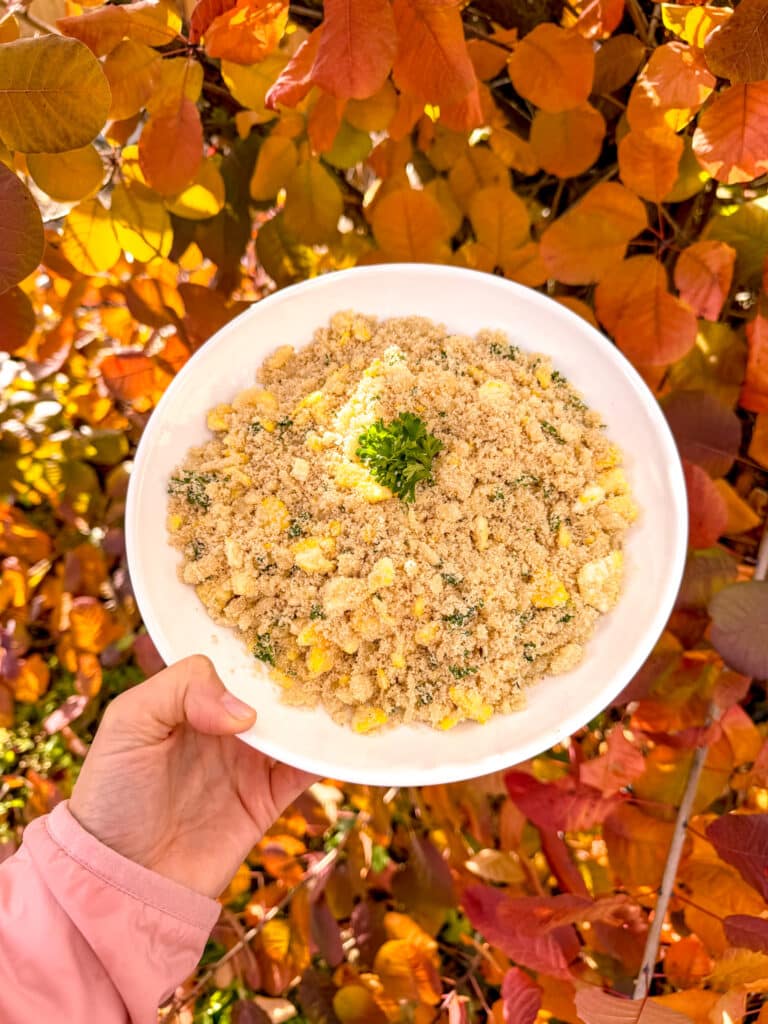
- Airtight Container: Let your farofa cool to room temp, then pop any leftovers in an airtight container in the fridge for up to two days.
- Reheating: When you’re ready to eat it again, just warm it gently on the stove or in the microwave.
Common Substitutions:
You’ll see cassava flour labeled as either “farinha de mandioca crua” (raw) or “farinha de mandioca torrada” (toasted). Both are made from cassava but give slightly different results:
- Raw cassava flour: Gives a softer, lighter farofa—great if you like it a bit moist.
- Toasted cassava flour: Results in a drier, crunchier, golden-brown farofa.
Personally, I’m team raw—it makes a less dry farofa, which I prefer.
No long cooking required: Even raw cassava flour is totally safe to eat, and you cook it the same way as toasted flour. Some people even skip cooking entirely and just sprinkle it on their meal!
Pre-seasoned farofa (“farofa pronta” or “temperada”): You can also find pre-seasoned versions—just open the package and enjoy. However, I much prefer making my own homemade farofa as it tastes much better.
Variations:
While this recipe features eggs (my favorite!), farofa is super versatile. You can mix in bacon, sausage, olives, raisins, carrots, bell peppers, hard-boiled eggs, or even bananas. Personally, I’ll always stick with my egg version at home, but feel free to play around and find your favorite!
Butter note: You can use less butter if you want, but your farofa will be less lumpy and a little drier—it’s all about personal preference.
FAQs:
No. Regular flour tastes nothing like cassava flour and they really aren’t the same thing at all.
Absolutely! Farofa can be prepared in advance. Store it in an airtight container in the refrigerator and reheat gently before serving.
Certainly. Farofa is incredibly versatile, and can easily be made into a vegan dish. You can omit the eggs or explore alternative ingredients like the one I have listed under variations.
The key is adding butter, constant stirring, and vigilant attention. Remove the eggs from the skillet as soon as they are soft and fluffy. Overcooking can lead to a dry texture.
es, cassava flour is naturally gluten-free, making it an excellent choice for those with gluten sensitivities or dietary restrictions.
The key is adding butter, constant stirring, and vigilant attention. Remove the eggs from the skillet as soon as they are soft and fluffy. Overcooking can lead to a dry texture.
Yes, cassava flour is naturally gluten-free, making it an excellent choice for those with gluten sensitivities or dietary restrictions
Absolutely! Toasted or raw work with this recipe and are equally authentic.
Certainly! Simply adjust the quantities of ingredients accordingly.
I have never seen it served as the main course in Brazil. It is a traditional Brazilian side dish.
No those are different things.

Best Brazilian Farofa with Eggs
Equipment
- 1 nonstick skillet
- 1 wooden spoon or silicone spatula
Ingredients
- 3/4 cup cassava flour raw or toasted
- 3 eggs
- 1 small onion or half a medium-sized onion finely chopped.
- 5 tablespoons of butter (2 tbsp for the eggs, 3 tbsp for the farofa)
- salt to taste
- 2 tablespoons fresh parsley, finely chopped optional
- drizzle of olive oil
Instructions
- Heat a nonstick skillet over medium heat and add 2 tablespoons of butter, letting it melt. Scramble the eggs in the pan, stirring constantly for soft, fluffy results—just be careful not to overcook them, or they’ll turn dry and rubbery.5 tablespoons of butter, 3 eggs
- When the eggs are done, transfer them to a plate and set aside.
- In the same skillet, add a drizzle of olive oil, followed by the diced onions. Sauté the onions until they become soft and translucent.drizzle of olive oil, 1 small onion or half a medium-sized onion
- Now add the remaining butter and let it melt over low heat. Once melted, add the cassava flour, making sure most of it gets coated in the butter. Stir for about a minute—it’ll get a little lumpy, and that’s exactly how it’s supposed to be.5 tablespoons of butter, 3/4 cup cassava flour
- Return the scrambled eggs to the pan and use a wooden spoon or rubber spatula to break them into small pieces, mixing them thoroughly with the cassava flour.
- Turn off the heat and give your farofa a taste. Adjust the salt if needed, and sprinkle with parsley if you like. Serve and enjoysalt to taste, 2 tablespoons fresh parsley, finely chopped
Notes
- Raw vs. Toasted Cassava Flour: You can use either raw (farinha de mandioca crua) or toasted (farinha de mandioca torrada) cassava flour. Raw gives a softer, slightly moister farofa, while toasted gives a drier, crunchier texture. Both are delicious, so it’s really a matter of personal preference. Personally, I like the raw kind best.
- Where to Buy: If you live in Canada, cassava flour can be found at brazilianmarket.ca, Portuguese grocery stores, and occasionally on Amazon (though it might be pricier).
- Pre-Seasoned Farofa: You can also find farofa pronta or temperada—this is already seasoned and ready to eat straight from the package.
- Butter Tip: You can adjust the amount of butter if you want a lighter farofa, but using less will make it a bit drier and less lumpy.
- Serving Suggestions: Farofa is perfect alongside steak, grilled chicken, or roasted meats, and it even works as a flavorful stuffing for holiday turkey.
Nutrition
Is this your first time making farofa? Let me know how it turns out. Also what other Brazilian recipes/ traditional recipes would you like to see?




The best farofa ever!!!