
Before I head into surgery, I had to share this One Bowl Orange Loaf Cake recipe! This is the ultimate easy-but-refined bake that requires no special equipment. The orange juice and zest give it a bright fresh orange flavor, while the almond flour and yogurt interact to create a super moist, delicious crumb. It’s finished with a heavy scatter of slivered almonds and sugar that bakes into a signature crunchy crust, giving you a massive texture contrast in every slice.

This is officially my last “crunchy” recipe for a while. I’m getting my wisdom teeth out tomorrow, which means I’m headed for a mandatory diet of soup and mashed potatoes. I am definitely not looking forward to the “mushy” life, so I’m going out on a high note with this crackly, almond-topped beauty. While I’m stuck with the soft stuff, you should be making this! I am going to miss that crackly, golden crust so much during my recovery weeks.
If you’re a fan of bright, citrusy desserts, don’t forget to check out our family favorites: Passion Fruit Mousse and Brazilian Lemon Meringue Pie.

Equipment:
- Standard Loaf Pan: A 9×5 inch (23×13 cm)
- Large or Medium Bowl: Since this is a one-bowl recipe, make sure your mixing bowl is big enough to hold all the dry and wet ingredients comfortably.
- Microplane or Fine Zester: For getting the zest off the oranges without the bitter white pith.
- Parchment Paper: I recommend lining the pan with a “sling” (paper hanging over the sides) to easily lift the cake out without disturbing the crunchy almond crust.
- Kitchen Scale: For the most accurate results
- Spatula and whisk
📋 Ingredients (Overview)
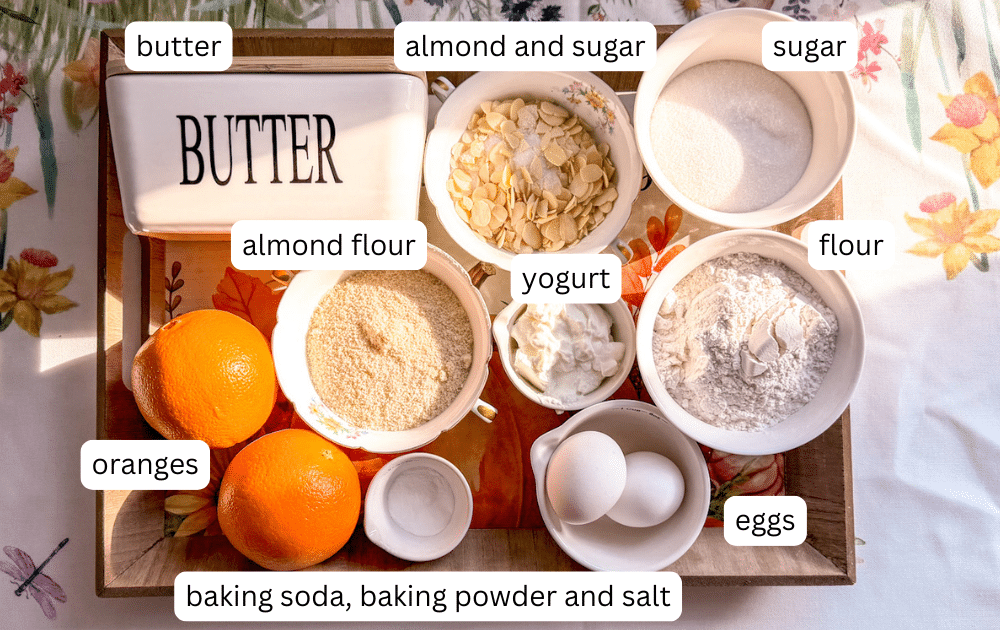
- White sugar
- Unsalted melted butter
- Large Eggs
- Greek yogurt
- All Purpose flour (Unbleached)
- Almond flour
- Navel oranges (zest and juice)
- Baking powder
- Baking soda
- Pinch of salt
- Topping: Slivered almonds, sugar and orange zest (optional)
🥣 Instructions (Overview )
This recipe is made with simple ingredients—no mixer or special equipment required.
- Sugar & Zest: In a large bowl, rub the orange zest into the sugar to release the aromatic oils.
- Wet Ingredients: Whisk in the eggs, followed by the Greek yogurt, melted butter, and fresh orange juice.
- Dry Ingredients: Add the flour, almond flour, baking powder, baking soda, and salt. Mix until just combined.
- The Topping: Pour the batter into a prepared loaf pan. Sprinkle the slivered almonds and the extra sugar over the top. For an extra pop, add a little more orange zest.
- Bake: Bake in a preheated oven at 175°C (350°F) for 45–50 minutes, or until a toothpick comes out clean.

💡 Baker’s Science: Pro Tips for Success
- The Zest Secret: Rubbing the zest into the sugar isn’t just a fancy step; citrus oils are fat-soluble. By massaging them into the sugar first, you ensure the orange flavor is infused into the structure of the cake rather than just having little flecks of peel.
- The “Double-Lift”: This recipe uses both baking powder and baking soda. The baking soda reacts immediately with the acid in the yogurt and orange juice, providing an initial boost, while the baking powder kicks in during the heat of the oven. This is what keeps the cake from being too dense.
- Flour Mixture: The 50g of almond flour does more than add flavor. It disrupts the gluten formation of the wheat flour, which is the “secret” to achieving that velvety, pound-cake-like crumb without the heavy grease of a traditional pound cake. (see my deliciously easy and fluffy blueberry muffins that uses the same trick!) Plus it adds a delicious flavor!
- Temperature Check: Ensure your eggs and yogurt aren’t straight-from-the-fridge cold. If they are too cold, they will cause your melted butter to seize into tiny clumps, which might lead to an uneven “spotted” texture in the finished loaf.
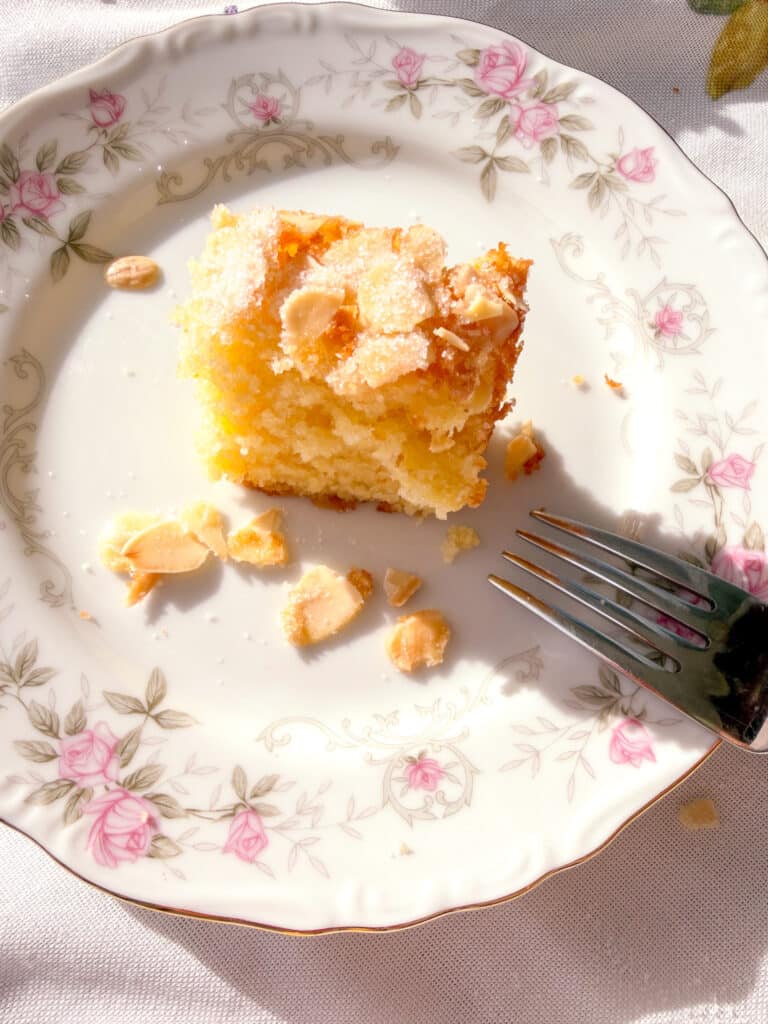
☕ How to Serve
This delicious orange loaf cake loaf that fits almost any time of day:
- Afternoon: The perfect companion to your favorite tea or coffee.
- Breakfast: A refined but simple way to start the morning.
- Dessert: Serve it as a light finish to a big meal, perhaps with a dollop of cream.

✨ Visuals & Presentation
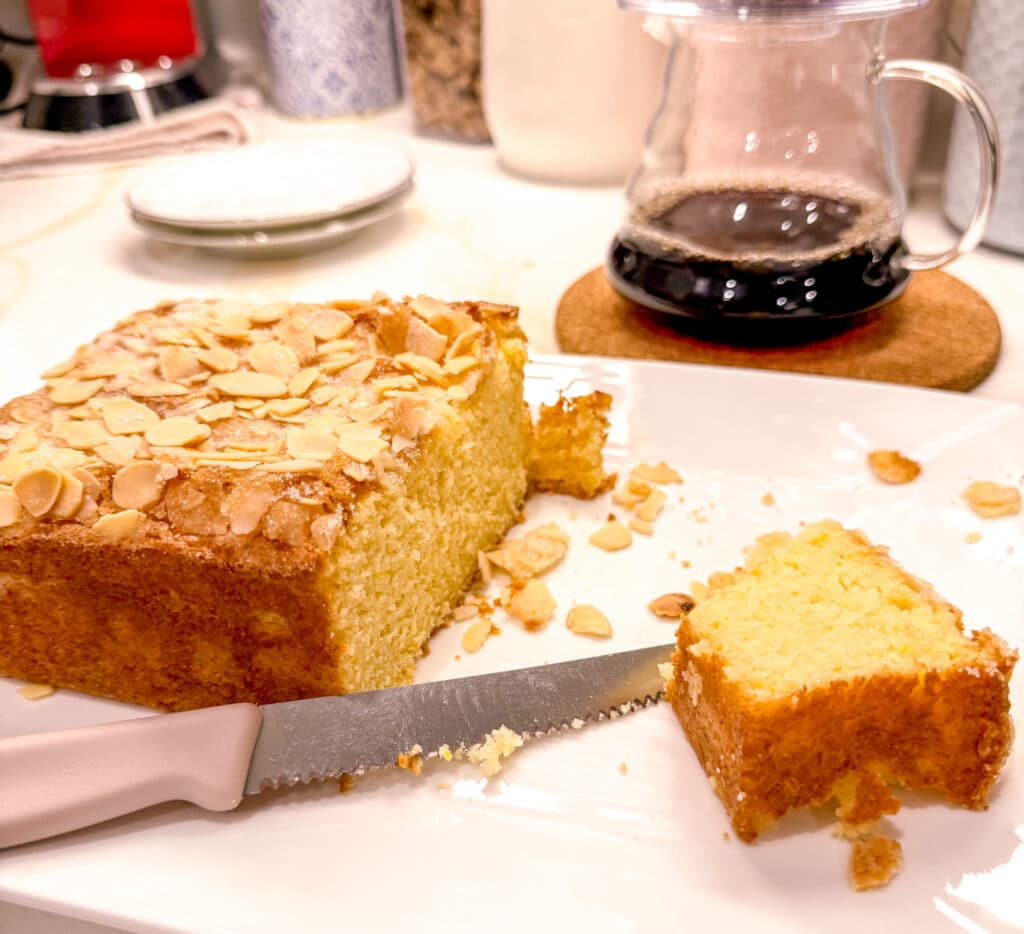
For that rustic, “bakery-window” look, let the loaf cool completely before slicing. Because of the tender almond flour crumb, slicing it while warm will result in messy, crumbly pieces. If you’re in a hurry, move it to a wire rack to speed up the process.
I love to serve this on a simple wooden board to lean into that “home-baked” feel. Slice it thick—about 1.5 inches—to show off the soft, velvety texture. For a professional touch, scatter a few extra toasted slivered almonds on the plate. It’s a simple cake, but it looks incredibly elegant when that golden, sugary crust catches the light.
🧺 How to Store & Freeze
- At Room Temperature: Keep the loaf in an airtight container or wrapped tightly in parchment paper for up to 3 days.
- Pro Tip: To keep the almond crust “crunchy,” avoid plastic wrap if possible—a tin or a cake dome is better as it allows a tiny bit of air circulation.
- In the Fridge: If your kitchen is very warm, you can store it in the fridge for up to 5 days. Just note that the fridge can slightly firm up the butter in the cake, so let a slice sit at room temperature for 10 minutes before eating to regain that velvety texture.
- Freezing: This cake freezes beautifully! Wrap individual slices in parchment paper and place them in a freezer-safe bag for up to 2 months.
- To Reheat: Thaw at room temperature or give it a 15-second zap in the microwave for that “just-baked” warmth.
📝 FAQ
How do I store this orange loaf?
Keep the loaf in an airtight container at room temperature for up to 3 days. The almond flour and yogurt keep it moist much longer than a standard cake.
Can I freeze it?
Yes! Wrap individual slices in parchment paper and place them in a freezer bag for up to 2 months.
My topping is browning too fast!
If the almond crust looks golden-brown but the center isn’t quite baked, loosely tent a piece of foil over the top for the last 15 minutes of baking.
💬 Join the Conversation
While I’m recovering and dreaming of solid food, I’d love to hear from you! Do you have any “soft-food” hacks that aren’t just plain yogurt? Also make sure to leave a comment below and let me know your favorite citrus cake variations!
🧡 See You Soon!
I’ll be taking it easy for the next two weeks, but I’m already looking forward to getting back into the kitchen to share more “crunchy” recipes once I’m fully recovered. Thank you for following along on this journey—wish me luck with the surgery!
One-Bowl Orange Loaf
Equipment
- large mixing bowl
- Microplane or Zester Essential for getting that fresh orange zest without the bitter white pith.
- Parchment paper I recommend lining the pan with an "overhang" or sling. This makes it easy to lift the cake out without cracking the almond crust.
- Kitchen scale using a scale is the best way to ensure your orange loaf turns out perfect every time.
Ingredients
- 160 g white granulated sugar
- zest of 2 oranges see notes
- 2 large eggs room temperature
- 120 g unsalted butter melted and cooled slightly
- 100 g Greek yogurt full fat preferred
- 100 ml fresh orange juice approx. 1 or 1.5 oranges
- 200 g unbleached all-purpose flour
- 40 g almond flour
- 1½ teaspoon baking powder
- 1/4 teaspoon baking soda
- 1 pinch salt
The Crunchy Topping
- 40 g slivered almonds
- 3 tablespoons white granulated sugar for sprinkling
- zest of one orange optional
Instructions
- Preheat your oven to 175°C (350°F). Grease a standard 9×5 inch loaf pan and line it with parchment paper, leaving a slight overhang on the sides for easy lifting.
- In a large mixing bowl, combine the 160g sugar and the orange zest. Use your fingertips to rub the zest into the sugar until it is fragrant and looks like damp sand.160 g white granulated sugar, zest of 2 oranges
- Add the eggs to the orange sugar. Whisk for about until the mixture is well-combined and smooth.2 large eggs
- Whisk in the melted butter, Greek yogurt, and orange juice until the batter is completely smooth and combined.120 g unsalted butter, 100 g Greek yogurt, 100 ml fresh orange juice
- Add the all-purpose flour, almond flour, baking powder, baking soda, and salt. Switch to a rubber spatula and fold gently until just combined. Do not overmix; stop once you see no more streaks of flour.200 g unbleached all-purpose flour, 40 g almond flour, 1½ teaspoon baking powder, 1/4 teaspoon baking soda, 1 pinch salt
- Pour the batter into the prepared pan. Evenly scatter the slivered almonds over the top, then sprinkle the 3 tablespoons of sugar over the almonds. For even more citrus punch, sprinkle the optional zest of one more orange over the top now.40 g slivered almonds, 3 tablespoons white granulated sugar, zest of one orange
- Place in the center of the oven for 45–50 minutes. The cake is done when the top is golden brown and a toothpick inserted into the center comes out clean.
- Let the loaf cool in the pan for 10–15 minutes. Use the parchment paper "sling" to lift it onto a wire rack.
- Wait until it cools completely before slicing. This ensures the almond flour crumb sets, allowing you to get clean, velvety slices rather than crumbly ones.
Notes
- The “Juiciness” Test: To predict how juicy an orange is, look for fruit that feels heavy for its size and has thin, smooth skin. If the skin is very thick and “pebbly,” the orange often has more pith and less juice.
- Hitting the 100ml Mark: Depending on the variety, you may need more or less fruit than the recipe suggests. For this loaf, I ended up using 1.5 oranges to get exactly 100ml. If your oranges are on the dry side, keep a second (or third) one handy just in case!
- Zesting Like a Pro: Be careful to zest only the bright orange outer layer. The white “pith” underneath is quite bitter and will change the flavor of your cake.
- Use a Kitchen Scale: For the most consistent results, I highly recommend weighing your all-purpose flour and almond flour. Volume measurements (cups) can vary wildly depending on how you scoop, but grams are always accurate.
- The “Crunch” Factor: To keep that signature almond topping crunchy, avoid wrapping the loaf tightly in plastic wrap. The trapped moisture will soften the sugar crust. Instead, store it in a cake tin, under a glass dome, or loosely covered with foil.
- Room Temperature: This cake stays beautifully moist thanks to the yogurt. Keep it in an airtight container at room temperature for up to 3 days.




Leave a Reply